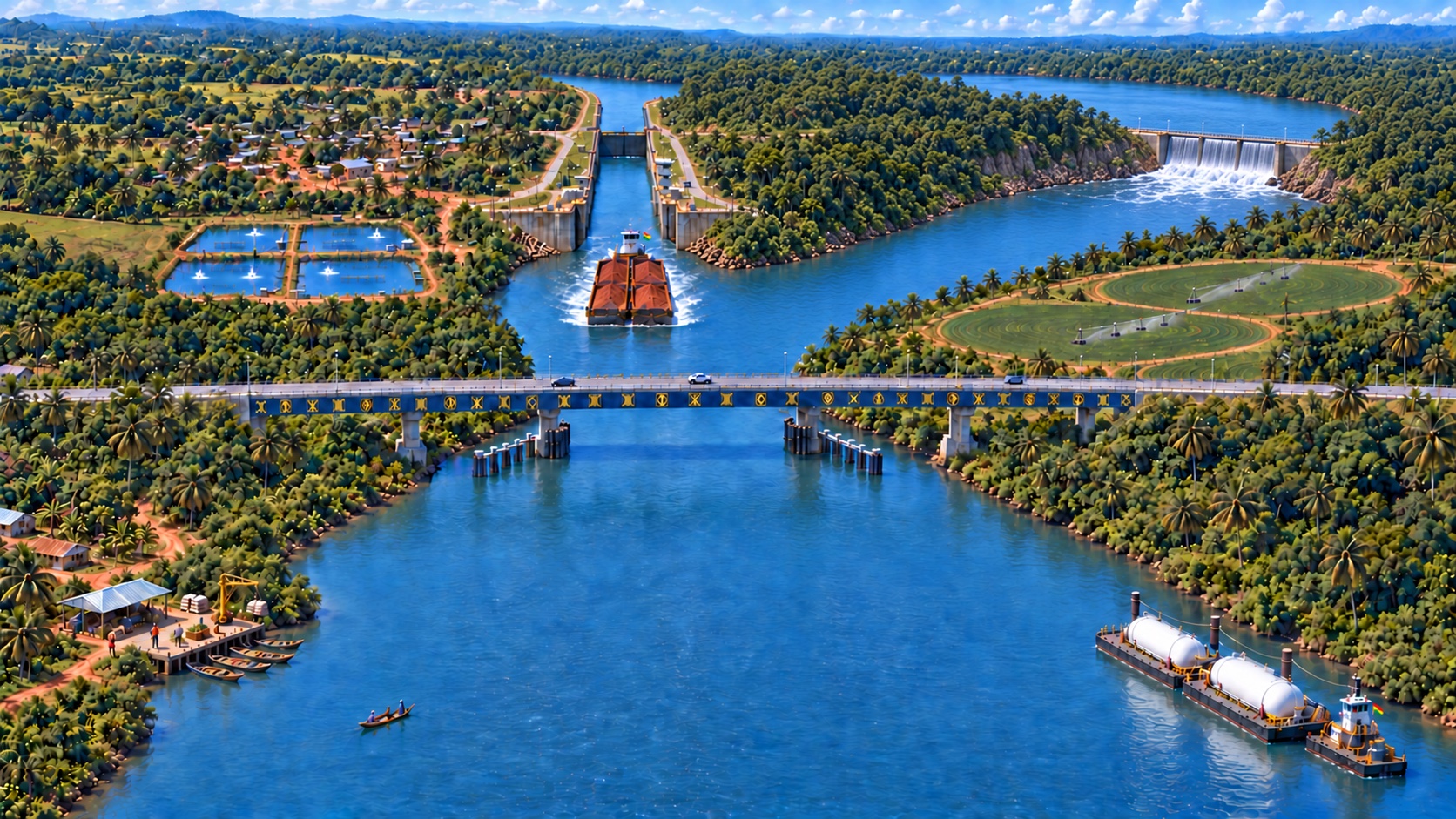
Artist's impression: a cargo vessel leaves a lock on the Ankobra, below a road bridge and a weir.

Transforming Ghana’s Ankobra River into a vibrant transport corridor

We are developing a modern waterway that will transform Ghana’s inland logistics sector.

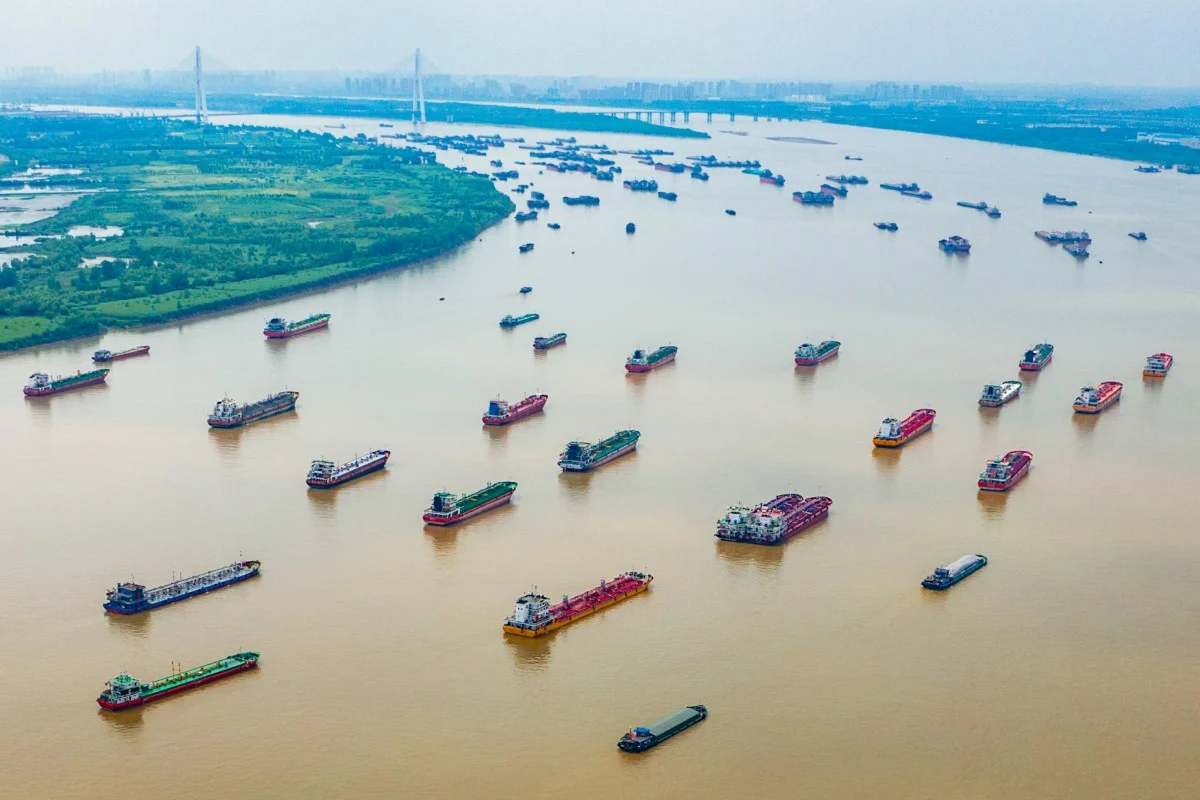
Barge traffic on the Yangtze River

How rivers build nations

Over history, nations have developed and grown on their major river basins. They still do.

  • Tonnage. Ports on China’s Yangtze were expected to handle more than 4 billion tonnes of cargo in 2024 — the busiest inland waterway in the world. The Rhine carried 281.9 million tonnes in 2025.
  • Trucks off the road. In the United States, one 15-barge tow carries as much as 1,050 trucks.
  • Savings. On a gallon of fuel, a barge moves a tonne of cargo about four and a half times as far as a truck. For the same cargo, trucks give off about nine times the greenhouse gas.
  • Lives saved. For every death in a barge accident, trucks moving the same freight cause 121. More than 2,400 people died on Ghana’s roads in 2024.

Sources: China Ministry of Transport, via Hellenic Shipping News; Central Commission for the Navigation of the Rhine; Texas A&M Transportation Institute for the National Waterways Foundation (2022); Ghana National Road Safety Authority, via GNA.

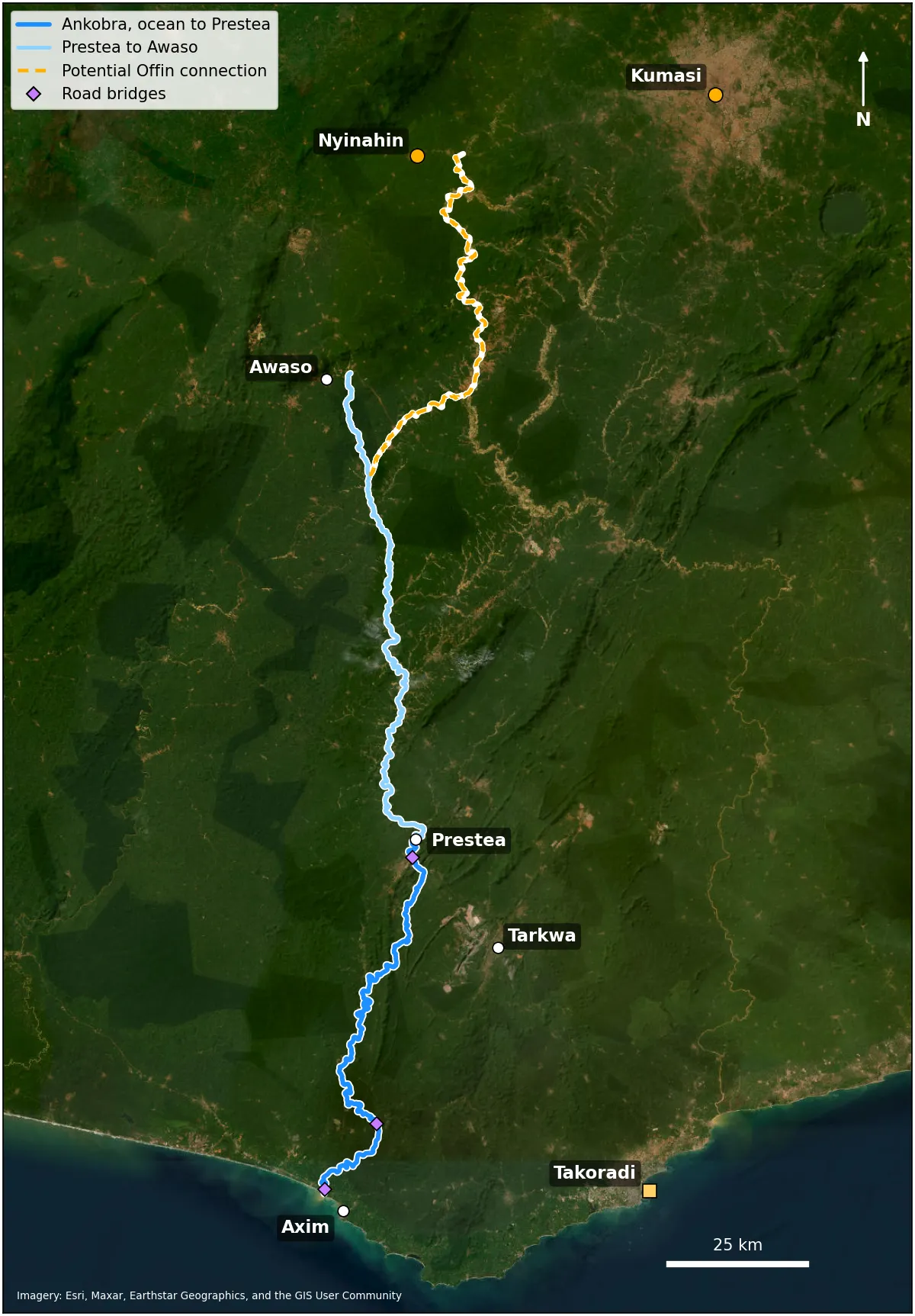
Satellite map of the Ankobra River from the sea at Axim to Awaso, with a dashed potential connection to the Offin River toward Nyinahin and Kumasi.

The Ankobra corridor

The Ankobra runs from the gold and bauxite belt of Western Ghana to the sea near Axim. Today its cargo moves by road. We plan to make the river navigable all year, for about 245 km from the ocean to Awaso. We are also exploring a canal connecting the Ankobra to the Offin River, to unlock Nyinahin and Kumasi.

  • A navigation channel, dredged and excavated along the river.
  • Eighteen locks and weirs that lift vessels 113 m, from sea level to Awaso.
  • Electric motor vessels, each carrying about 3,500 tonnes.
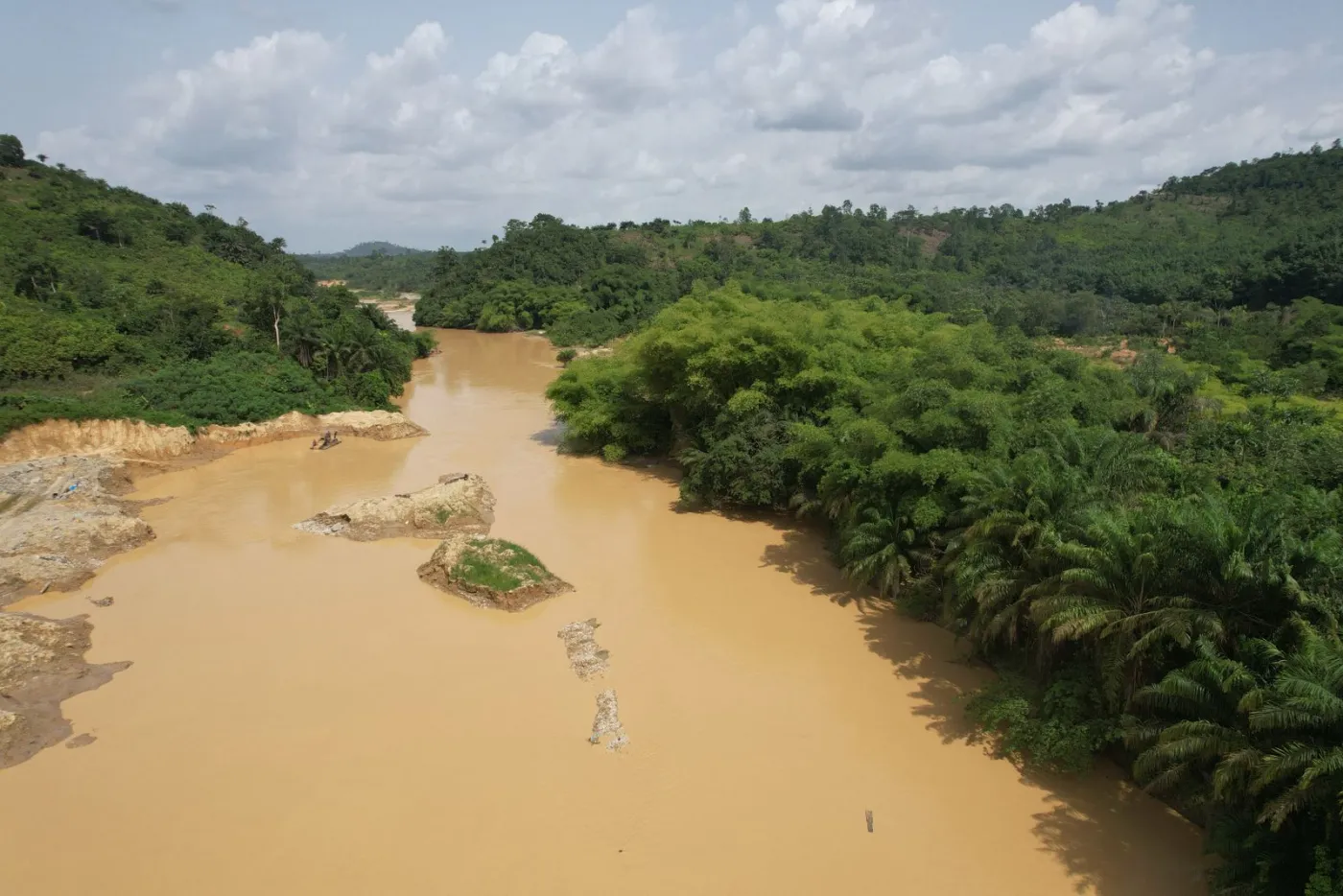
Drone view of the Ankobra River between forested banks.

Where we are

Development of the project began in 2023, exploring transport by river to Prestea. Since then we have:

  • surveyed the river by canoe, drone, LiDAR and multibeam sonar;
  • built a terrain model of the river, and hydraulic models to a 1-in-100-year flood standard;
  • drilled boreholes and designed the locks, weirs and vessels;
  • secured environmental, water-use and minerals permits; and
  • met the river communities, their chiefs, the districts and national government.

We are now preparing the final engineering and modelling to allow the project to be financed, and expect to begin construction soon.
The Board

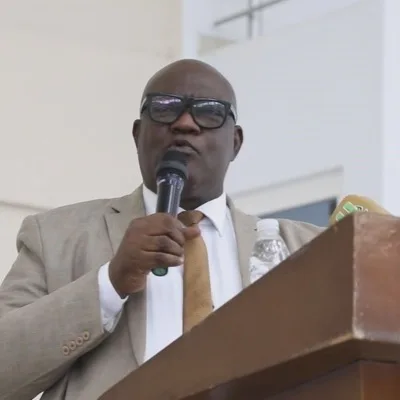
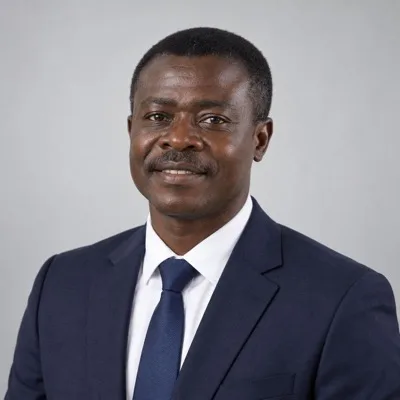
Photo of Captain Ebenezer Afadzi

Captain Ebenezer Afadzi

Chairman

Began his career at sea as a navigating officer. Joined Ghana Ports and Harbours Authority as a pilot and rose to Harbour Master of Takoradi and Tema, then Director of Port at Takoradi from 2015 until he retired in 2023. A former member of the GPHA Board.

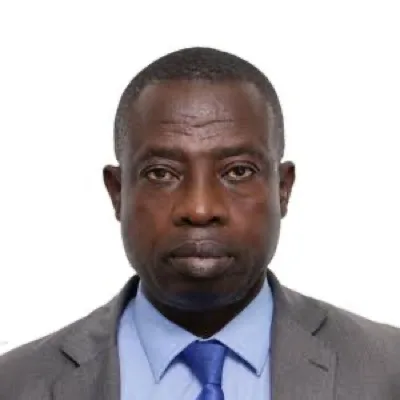
Photo of Samuel Ntow-Kummi

Samuel Ntow-Kummi

Director

Retired in 2023 from Ghana Ports and Harbours Authority as General Manager for Corporate Development, where he structured many of GPHA’s projects and commercial arrangements. Chief executive of a port and shipping consulting firm.

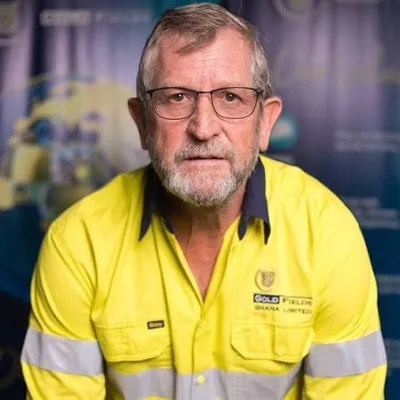
Photo of Hans de Beer

Hans de Beer

Director

A mechanical engineer who has lived and worked in Ghana for over 20 years. Led Engineering for Gold Fields Ghana at the Tarkwa mine before joining Genser Energy as Vice President for Midstream.

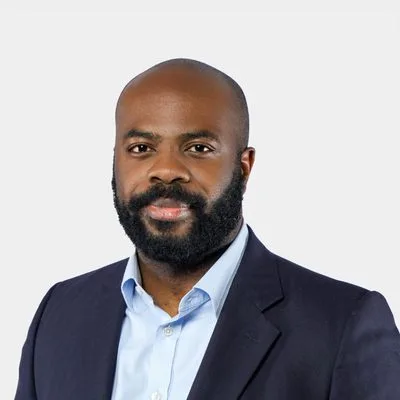
Photo of Omosuyi Fred-Omojole

Omosuyi Fred-Omojole

Director

Vice President, Investor Relations at Genser Energy. Formerly Head of Corporate Development and General Counsel at Anergi Group, and a board member of the Lake Turkana Wind Power project. Trained at Slaughter and May; practised at Linklaters and Dentons.

The team

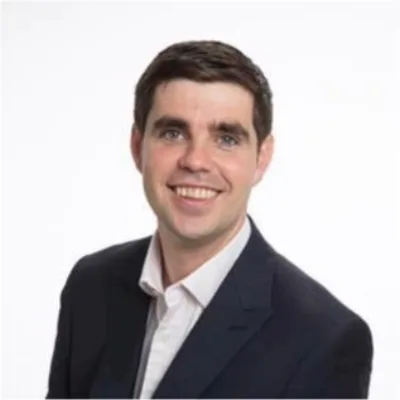
Photo of Niall Ó Tuathail

Niall Ó Tuathail

Managing Director

Leads the day-to-day management of the project, and has carried it from concept in 2024. Joins from McKinsey & Company and the energy and logistics sector, including two years living in Ghana. Studied optimisation mathematics and statistics at Trinity College Dublin.

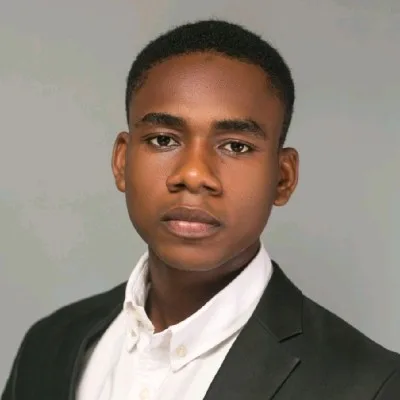
Photo of Raphael Atimbire

Raphael Atimbire

Survey

Leads the survey work: the bathymetry, topography and ground control behind the river’s terrain model. Has run several surveys of the Ankobra. A geospatial specialist and drone pilot, and a graduate of KNUST.

Photo of Ali Adamu

Ali Adamu

Community, regulatory and environmental

Leads community and regulatory engagement and environmental and social management. Through his firm, Kagyire Consult, he led the Ankobra ESIA, the work with the river communities, and the permits. Formerly at SMEC and Genser Energy.

Photo of Francisco Moyano

Francisco Moyano

Engineering and hydrology

Leads the hydraulic modelling of the river and the design channel, the flood standard, and the lock and weir engineering. A Senior Civil Engineer with SRK Consulting, specialising in surface hydrology and dam-break analysis.

Contact

For partnership, investment, government, community or media enquiries, email niall.o.tuathail@ankobrariver.com.

53 Sanderling Street, Takoradi, Ghana.